MIMETIC project – Exploring the hidden metabolic dialogue of tuberculosis
Launched through a Marie Skłodowska-Curie Postdoctoral Fellowship, the MIMETIC project explores an emerging and largely uncharted aspect of Mycobacterium tuberculosis (Mtb) biology: its exometabolome, i.e. the small molecules released by the bacterium into its environment.
Tuberculosis remains a major global health challenge, partly due to the complexity of interactions between the pathogen and its host. While much research has focused on bacterial genetics and virulence factors, far less is known about the role of secreted metabolites in shaping infection. The MIMETIC project addresses this gap by investigating how these molecules contribute to host–pathogen interactions.
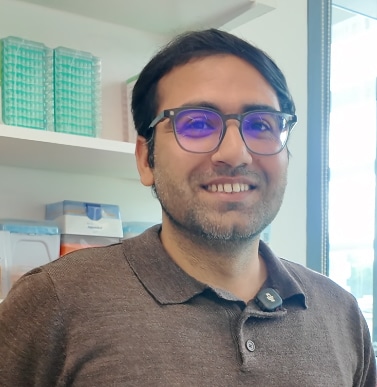
During his fellowship at IPBS (Toulouse), Saurabh Chugh developed and implemented advanced analytical workflows combining nuclear magnetic resonance (NMR) and mass spectrometry to characterize these extracellular metabolites. His work revealed that Mtb releases a diverse and dynamic repertoire of compounds including sugars, amino acids, and signaling molecules, whose composition varies depending on environmental conditions.
These findings suggest that the exometabolome plays an active role in bacterial adaptation and may influence how the pathogen interacts with host immune cells. By providing a first detailed map of these secreted metabolites, the MIMETIC project opens new perspectives for understanding tuberculosis pathogenesis and identifying potential metabolic targets for future therapies. Funded by a Marie Skłodowska-Curie Postdoctoral Fellowship, this project also highlights the role of European support in advancing scientific careers and fostering research excellence. The fellowship enabled Saurabh Chugh to expand his expertise into metabolomics and microbial metabolism, strengthen his scientific independence, and develop a coherent research programme at the interface of microbiology and host–pathogen interactions.
Building directly on these results, he will launch in 2026 a new project, METEOR, funded by the French agency ANRS. This project aims to move from discovery to mechanistic understanding by identifying key metabolites, uncovering the pathways that produce them, and determining their role in infection and immune modulation.
This transition illustrates how MSCA fellowships can act as a springboard for new research opportunities, supporting both scientific innovation and long-term career development.