
A Franco-Argentine collaboration to study the impact of non-canonical DNA structures on genome stability
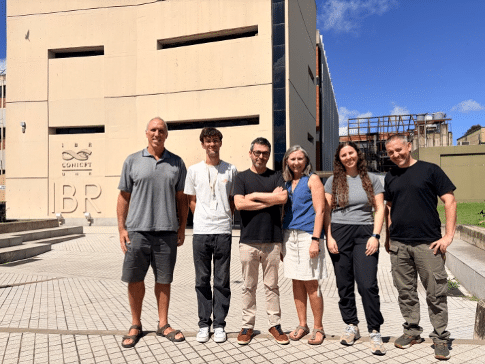
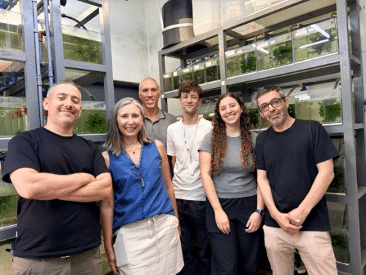
The project “Consequences of non-canonical DNA structures on genomic instability and their impact on animal development and differentiation” is part of a Franco-Argentine scientific collaboration coordinated by Dr. Dennis Gomez, researcher at the IPBS, and Dr. Pablo Armas from the Instituto de Biología Molecular y Celular de Rosario, affiliated with the Consejo Nacional de Investigaciones Científicas y Técnicas (CONICET) and the Universidad Nacional de Rosario.

This collaboration has been supported since 2022 by the ECOS-Sud programme, which promotes scientific exchanges between France and Latin America.

Understanding the role of G-quadruplex structures in genomic instability

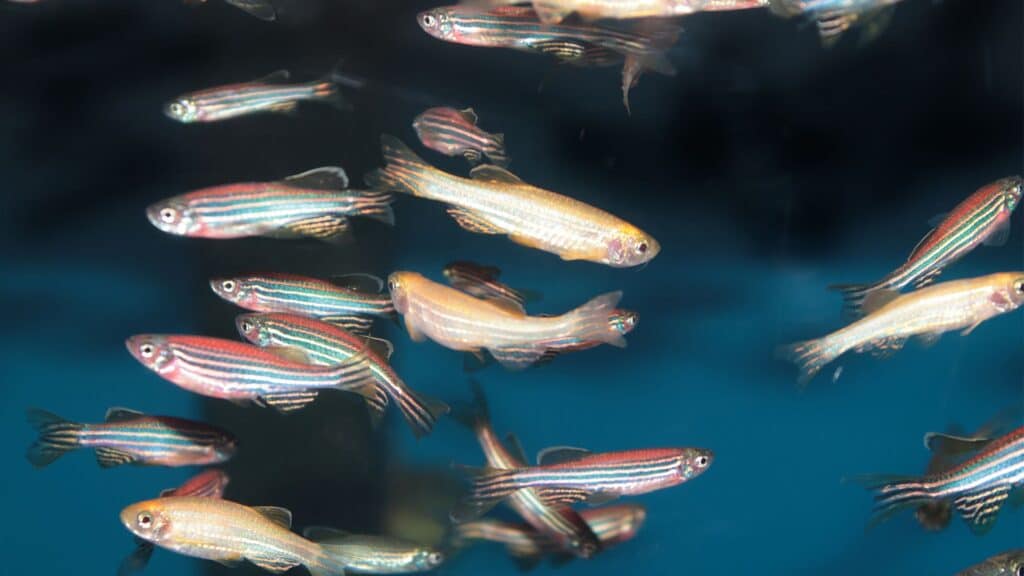
This research project investigates the role of G-quadruplexes (G4), non-canonical DNA structures that can influence genome organisation and dynamics. In particular, the researchers are studying their involvement in the formation of DNA double-strand breaks, a major type of lesion that can compromise genome stability. To analyse their biological consequences, the team uses Danio rerio (zebrafish) as an in vivo model. This system makes it possible to directly assess the impact of these DNA structures during embryonic development, providing an integrative approach linking DNA structural dynamics with functional consequences at the scale of the organism.

A scientific collaboration initiated in 2015

The collaboration between the teams of Dennis Gomez and Pablo Armas began in 2015, with a first ECOS-Sud grant awarded for a three-year period. A second grant obtained in 2022, which is currently ongoing, has allowed the partners to continue and strengthen their joint research activities.

The ECOS-Sud programme supports scientific exchanges between France and several Latin American countries and mainly funds the mobility of researchers and students involved in collaborative projects. It finances short research visits, typically around fifteen days for senior researchers and up to one month for doctoral students.

Within this framework, the IPBS has already hosted five Argentine students and welcomed Pablo Armas on two occasions, fostering close scientific exchanges and contributing to the training of young researchers. In this project, Dennis Gomez is responsible in particular for the overall scientific coordination, interactions between the different partners, and the organisation of seminars related to the project. He is currently in Argentina as part of this collaboration.

Scientific results from the collaboration

This collaborative research has already resulted in several scientific publications. The findings have notably been reported in the journals Scientific Reports and Nucleic Acids Research, contributing to a better understanding of the role of non-canonical DNA structures in genome stability and in the biological processes associated with them.

A partnership set to continue

Although the current ECOS-Sud funding will come to an end this year, the collaboration between the French and Argentine teams will continue, reflecting the strength of the scientific partnership established over nearly a decade and highlighting the importance of international collaborations in advancing fundamental research.

A Franco-Argentine collaboration to study the impact of non-canonical DNA structures on genome stability