

IPBS will lead one of the five equipment projects selected under the “Breakthrough Technologies in Cancer” (TREK) call
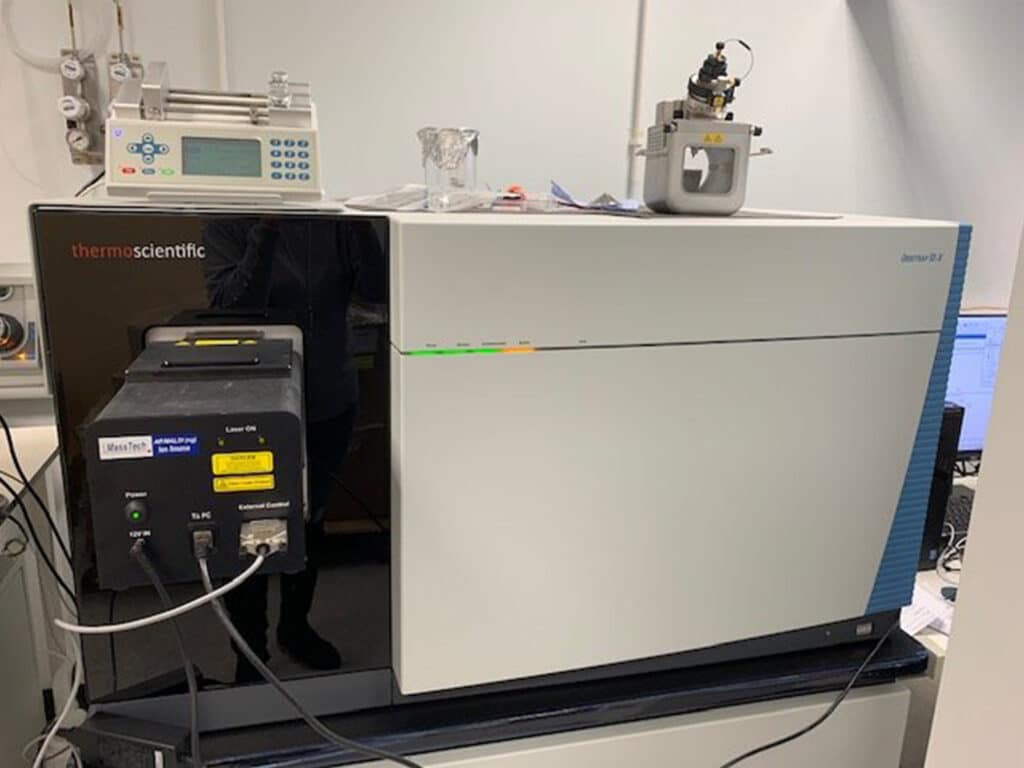
With the SPATICaM project – SPATIal omics of Cancer Microenvironment – IPBS is strengthening its capabilities in spatial metabolomics and proteomics to better characterize the tumor microenvironment. This funding will support the acquisition of an AP/MALDI source and a laser microdissection microscope, paving the way for novel spatial multi-omics approaches in cancer research.
As part of the 2021–2030 Ten-Year Cancer Control Strategy, the Breakthrough Technologies in Cancer (TREK) call for projects aims to support the acquisition of high-end equipment capable either of generating entirely new types of data or of significantly improving the efficiency of conventional data acquisition. Within this framework, IPBS will lead one of the five selected equipment projects with SPATICaM (SPATIal omics of Cancer Microenvironment), a project led by Prof Catherine Muller-Staumont and Dr Landry Blanc and built on the excellence of the proteomics approaches developed at the institute.
An integrated spatial multi-omics platform
The ambition of SPATICaM is to establish at IPBS an integrated spatial multi-omics platform combining:
mass spectrometry imaging (MSI),
automated laser microdissection (LMD),
and single-cell proteomics.
This platform will be deployed in close collaboration with the proteomics team, ProteoToul, already equipped with state-of-the-art systems for single-cell proteomics. The acquisition of an AP/MALDI source and an LMD7 microscope will add a crucial spatial dimension to the institute’s existing single-cell workflows. This new capability will position IPBS as a leading center for spatial metabolic profiling at single-cell resolution in cancer research.
Linking spatial metabolism to cellular proteomic programs
The major strength of SPATICaM lies in the integration of technologies able to connect tissue spatial organization, local metabolic states, and cellular proteomic programs. MSI will make it possible to identify metabolically active regions directly within tissue sections. Automated laser microdissection, guided by microscopy, will then enable the selective recovery of cells located in these regions of interest. These cells can subsequently be analyzed using single-cell proteomics approaches. This workflow will provide unprecedented access to the interplay between tumor metabolism and cellular heterogeneity, with a level of spatial resolution and precision that has so far remained difficult to achieve.
A first application focused on breast cancer and bone metastases
The first application of SPATICaM will focus on the study of metabolic interactions between adipocytes and tumor cells in breast cancer, both at the primary site and in bone metastases. Beyond this initial project, the implementation of this pipeline — unprecedented in France — will enable the development of new projects on the tumor microenvironment, one of the institute’s major research priorities. Through this success, IPBS further confirms its commitment to developing cutting-edge technologies that advance our understanding of cancer and open new avenues in tumor biology.
IPBS will lead one of the five equipment projects selected under the “Breakthrough Technologies in Cancer” (TREK) call